
How Heat Affects Vinyl Flooring in Commercial Settings: What You Need to Know about LVT and Sheet Vinyl
Is your commercial vinyl flooring buckling or showing gaps in hot areas? Heat exposure is the #1 cause of vinyl flooring failure in commercial settings. Understanding how temperature affects different vinyl flooring types can save you thousands in replacement costs and ensure optimal performance for your business.
At Continental Flooring Company, we help you make informed decisions about your flooring choices by understanding these critical performance factors that impact your investment.
Critical Temperature Thresholds That Damage Vinyl Flooring
Understanding when vinyl flooring becomes vulnerable:
- 85°F and above: Initial expansion begins in most vinyl products
- 95-100°F: Noticeable dimensional changes and adhesive softening
- 110°F+: Significant risk of permanent damage and surface deformation
- Sustained exposure over 120°F: Guaranteed damage to most vinyl systems
Vinyl flooring products are composed of PVC (polyvinyl chloride) and various additives that give them flexibility and durability. However, these materials respond predictably to temperature changes, undergoing thermal expansion that can lead to performance issues if not properly managed.

Does Heat Damage Luxury Vinyl Plank Flooring?
Yes, LVT is particularly susceptible to heat damage. LVT can expand up to 1/4 inch per 100 feet when the temperature increases by 20°F.
Dimensional Changes in LVT Systems
LVT planks and tiles expand when heated, potentially creating gaps at seams or buckling if expansion isn’t accommodated. In commercial settings with large temperature fluctuations—such as restaurants with commercial kitchens or retail spaces with significant solar exposure—this expansion can be particularly problematic.
Installation Method Considerations
- Glue-Down LVT:
High temperatures can affect the bond between LVT and the subfloor. Some adhesives may soften or lose their grip strength when exposed to sustained heat above 95°F, leading to loose tiles or shifting planks. - Floating LVT:
Click-lock or loose-lay systems may experience more pronounced movement during thermal expansion since they’re not anchored to the subfloor. This can result in gaps opening at perimeter walls or transitions, and in extreme cases, the entire floor “walking” or shifting position. - Surface Integrity:
Temperatures above 90°F can cause LVT surfaces to become soft and more susceptible to indentations from furniture, equipment, or heavy foot traffic common in commercial environments.
 Why Vinyl Flooring Buckles in High Temperature Environments
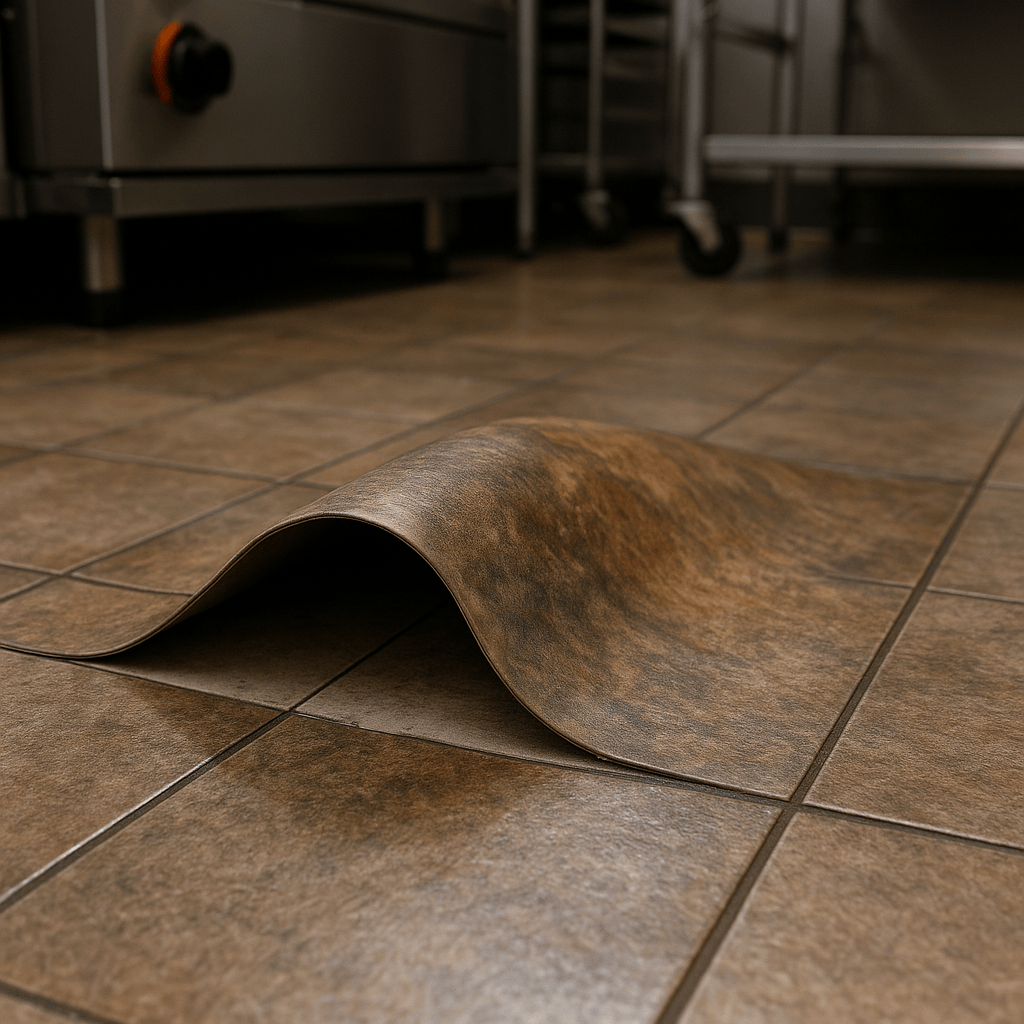 Why Vinyl Flooring Buckles in High Temperature Environments
Vinyl flooring buckles because PVC naturally expands when heated. When this expansion isn’t properly accommodated through expansion joints or proper installation techniques, the material has nowhere to go except up—creating buckles and lifted edges.
Key fact: Most vinyl products expand approximately 0.002 inches per inch per degree Fahrenheit increase.
Sheet Vinyl Heat Challenges in Commercial Spaces
Seam Separation Issues
Sheet vinyl’s large format means that thermal expansion affects larger surface areas. Heat can cause seams to open up, creating potential trip hazards and allowing moisture infiltration.
Surface Distortion Problems
Prolonged exposure to heat above 95°F can cause sheet vinyl to develop waves, bubbles, or permanent deformation, particularly in areas near large windows, heating equipment, or industrial processes.
Accelerated Wear Patterns
High temperatures can accelerate the aging process of sheet vinyl, resulting in premature fading, brittleness, and a reduced lifespan in your commercial facility.
VCT (Vinyl Composition Tile) Heat Performance
Thermal Expansion in VCT Systems
VCT tiles, while more dimensionally stable than other vinyl products due to their mineral filler content, still experience expansion above 90°F. This can lead to tiles lifting at corners or edges, particularly in areas with inconsistent heating.
Adhesive Vulnerability in High Heat
Traditional cut-back adhesives commonly used with VCT can become soft and lose bond strength when exposed to sustained heat above 95°F. This is especially problematic in commercial kitchens, mechanical rooms, or areas with radiant heating systems.
Surface Performance Under Heat Stress
Heat exposure can cause VCT to become more pliable, making it susceptible to scuffing and permanent indentations. Additionally, wax finishes typically applied to VCT can soften and wear away more rapidly in high-temperature environments.
Commercial Applications Most at Risk for Heat Damage
Certain commercial environments present higher heat exposure risks for your vinyl flooring investment:
- Restaurants and food service facilities with commercial kitchens
- Retail spaces with extensive south-facing windows and solar heat gain
- Healthcare facilities with sterilization equipment
- Manufacturing facilities with industrial processes generating heat
- Office buildings with server rooms or mechanical equipment areas
How to Prevent Heat Damage to Your Commercial Vinyl Floors
Proper Material Acclimation
Allow vinyl products to acclimate to installation environment temperatures for 48 hours before installation, maintaining consistent temperature during this period.
Strategic Expansion Joint Planning
Incorporate appropriate expansion joints and transition strips to accommodate thermal movement, especially in large commercial installations. Allow 1/4″ expansion gap at all perimeter walls.
Heat-Resistant Adhesive Selection
Choose adhesives rated for your expected temperature conditions. High-temperature epoxy systems work best for extreme heat areas above 100°F.
Environmental Control Systems
Maintain consistent HVAC operation to minimize temperature fluctuations. Consider window treatments or films to reduce solar heat gain in areas with direct sunlight exposure.
Professional Product Selection
Work with experienced flooring professionals to select vinyl products with enhanced thermal stability ratings tailored to your specific commercial application needs.
Signs Your Commercial Vinyl Flooring Has Heat Damage
Immediate Warning Signs to Watch For:
- Gaps appearing at seams or edges
- Tiles or planks lifting at corners
- Bubbling or wave patterns in sheet vinyl
- Soft, indentable surface areas
Long-term Damage Indicators:
- Permanent buckling or warping
- Accelerated fading in sunny areas
- Frequent need for repairs in specific zones
Frequently Asked Questions About Heat and Vinyl Flooring
Can vinyl flooring handle commercial kitchen heat?
Standard vinyl struggles in commercial kitchens where temperatures regularly exceed 100°F. Specialized high-temperature vinyl products can handle these conditions when properly installed with appropriate adhesive systems.
How do I know if my vinyl flooring has heat damage?
Look for gaps at seams, tiles lifting at corners, bubbling or wave patterns, soft surface areas, or loose tiles that shift when walked on. These are clear indicators that heat has compromised your flooring system.
What’s the best flooring for high-heat commercial spaces?
Consider high-temperature rated LVT (rated to 120°F+), reinforced sheet vinyl with enhanced thermal stability, or alternative materials like ceramic tile for extreme heat areas above 120°F.
When should I repair vs. replace heat-damaged vinyl flooring?
Repair small gaps (less than 1/8″) and minor edge lifting. Replace when there’s widespread buckling, permanent deformation, or extensive seam separation affecting safety or functionality.
Professional Solutions for Your Commercial Vinyl Flooring Needs
At Continental Flooring Company, we understand that successful commercial flooring installation goes beyond product selection. Our expertise in evaluating environmental conditions, recommending suitable products, and implementing proper installation techniques helps ensure your vinyl flooring investment performs optimally, even in challenging heat conditions.
Ready to discuss your commercial vinyl flooring project? Our expertise can help you navigate the challenges of heat exposure and ensure long-lasting, beautiful floors for your business.
One Call Does It All!
Many of our flooring products are available on GSA Contracts. Continental Flooring Company can help you find the right combination of materials, design, and performance features for your facility.
Contact Continental Flooring Company today to explore your flooring solutions. With decades of experience and partnerships with leading manufacturers, we’re ready to help you find the best resilient floor for your space!
Please feel free to contact us for product advice, free samples, assistance with specifications, or to place an order. We welcome contract purchases, formal bids, RFQs, or Open Market requirements. One call will do it all!
Contact Us Today!
Call Toll Free 800-825-1221 | Email: info@continentalflooring.com
Our Segments
- Federal, State, County, and Municipalities
- Healthcare
- Schools, Colleges, and Universities
- Public Housing Authority (PHA)
Continental Flooring has been serving government agencies since 1979 and is a leading provider of flooring and ceilings in the public sector.