
Why Choose Carpet Tile: Complete Guide for Commercial Spaces
Could carpet tile be the right choice for your commercial flooring project? Understanding the key advantages and disadvantages of carpet tile can save you money in installation costs and may prevent costly renovation mistakes. As modular flooring solutions continue to gain popularity in commercial environments, making an informed decision between carpet tile and traditional broadloom becomes crucial to your project’s success.
Carpet tile offers unique benefits for businesses seeking flexible, durable flooring solutions, but it also has specific limitations that may affect your space’s aesthetics and functionality. At Continental Flooring Company, we help clients navigate these considerations to choose the solution that best meets their operational needs and budget requirements.
What is Carpet Tile?
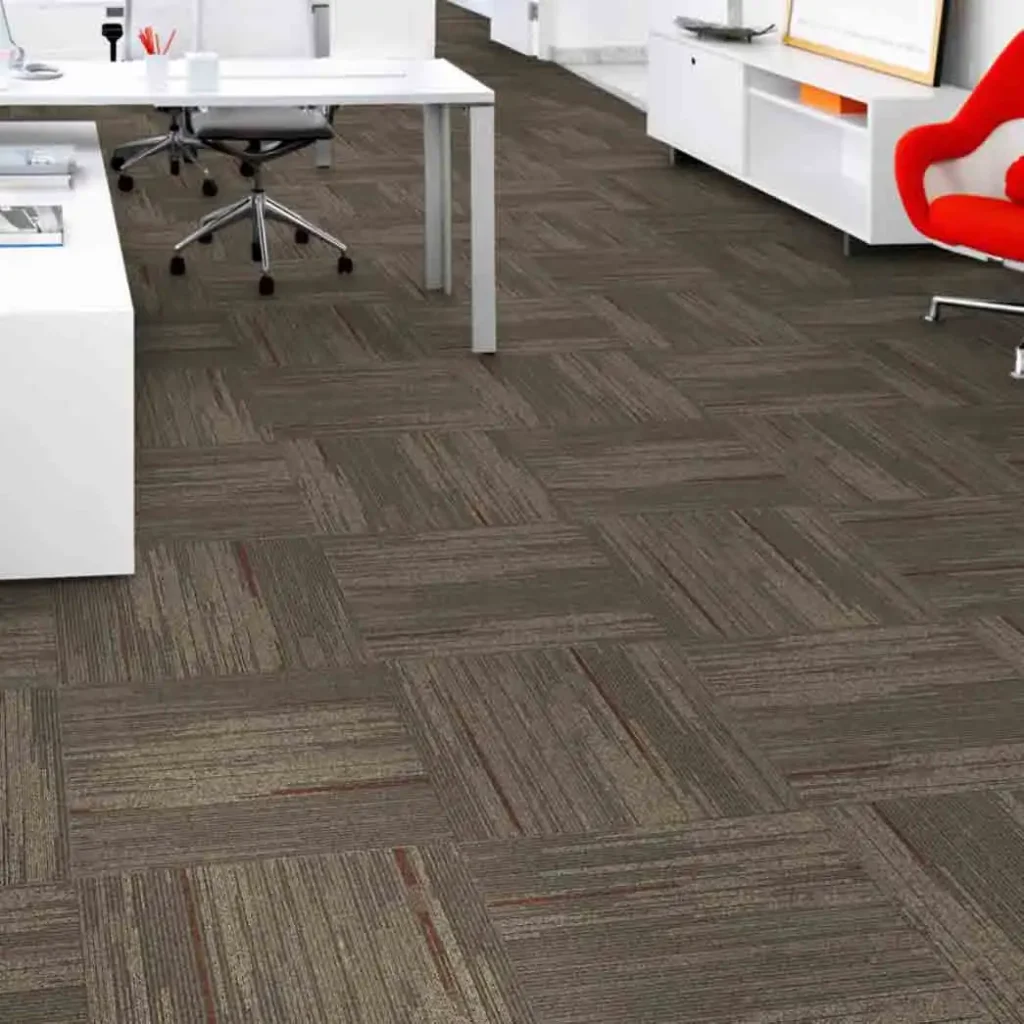
Carpet tile, also known as modular carpet (or carpet squares), are pre-cut carpet sections typically measuring 18″ x 18″, 24″ x 24″ (or 50cm x 50cm), but also can be found in varying plank sizes, hexagon, and other shapes. Unlike traditional broadloom carpet which comes in large rolls, carpet tile features integrated backing. They can be installed individually, creating a modular flooring system that offers unprecedented flexibility for commercial spaces.
Understanding what makes commercial carpet successful helps explain why carpet tile have become increasingly popular in offices, schools, healthcare facilities, and other high-traffic commercial environments where durability and easy maintenance are priorities.
Key Advantages of Carpet Tile for Commercial Spaces
Easy Installation and Reduced Labor Costs
One of the most significant advantages of carpet tile is the simplified installation process. Unlike broadloom carpet, which requires professional crews with specialized equipment, carpet tile can be installed quickly over a clean and dry subfloor. The smaller, manageable size makes them easier to transport, maneuver around obstacles, and position precisely.
Some carpet tile features peel-and-stick adhesive backing, further reducing installation complexity and labor costs. This DIY-friendly approach can significantly decrease project downtime in commercial environments where business continuity is essential.
Carpet Tile Replacement and Maintenance Benefits
Perhaps the greatest advantage of carpet tile is the ability to replace individual damaged or stained tiles without affecting the entire floor. If a section becomes permanently stained, worn, or damaged, you remove and replace those specific tiles rather than replacing entire carpet sections.
This modular approach proves especially valuable in high-traffic commercial areas where spot damage is inevitable. Keeping extra tiles ensures perfect color and pattern matching for future replacements, maintaining a consistent professional appearance.
Superior Design Flexibility and Creativity
Carpet tile unlocks design possibilities impossible with traditional broadloom. You can create custom patterns, borders, and color combinations by mixing different tiles. Popular design approaches include:
- Checkerboard patterns using alternating colors
- Directional layouts creating visual flow through spaces
- Accent borders defining specific areas or pathways
- Random patterns that hide wear and soil patterns effectively
- Geometric designs that reinforce corporate branding
Reduced Waste and Cost Efficiency
Carpet tile generates significantly less waste during installation compared to broadloom carpet. You order tiles to fit your space requirements, eliminating the excess material typically discarded with roll carpet installations. This precision ordering reduces material costs and supports environmental sustainability goals. Additionally, the modular nature means unused tiles can be stored for future use or relocated to other areas, maximizing your flooring investment.
Access to Subfloor Systems
In modern commercial buildings with raised floor systems concealing electrical, data, and HVAC infrastructure, carpet tile provides essential accessibility. Individual tiles can be easily removed to access cables, ductwork, or utilities without compromising the entire floor installation. This feature proves invaluable in technology-driven environments where infrastructure modifications and upgrades are frequent requirements.
Enhanced Durability for Commercial Use
Most commercial carpet tile products are engineered specifically for high-traffic environments. They typically feature:
- Dense, low-pile construction that resists crushing and matting
- Robust backing systems providing dimensional stability
- Stain-resistant treatments for easier maintenance
- Commercial-grade fiber systems designed for extended wear
Notable Disadvantages and Limitations of Carpet Tile
Visible Seams and Aesthetic Concerns
The most cited disadvantage of carpet tile is the visibility of seams between individual tiles. Even with professional installation and pattern-matching technology, seams remain noticeable, especially with lighter colors or certain patterns. This modular appearance may not achieve the seamless, luxurious look that broadloom carpet provides.
For organizations prioritizing a high-end, uniform aesthetic, particularly in executive areas or client-facing spaces, visible seams can detract from the desired professional image.
Higher Initial Material Costs
Carpet tile typically costs 10-20% more per square foot than comparable broadloom carpet. While long-term savings through reduced installation labor and easier maintenance often offset this initial premium, the upfront investment can strain project budgets.
However, when considering total cost of ownership including installation, maintenance, and replacement factors, carpet tile frequently proves more economical over the flooring’s lifespan.
Limited Luxury and Comfort Options
Other than carpet tile with cushion backing, most carpet tiles generally feature shorter, denser pile construction optimized for durability rather than comfort. This makes them less suitable for environments where underfoot comfort is prioritized, such as executive offices or residential-style commercial spaces. The commercial-focused design also limits options for plush textures and luxury finishes available in high-end broadloom products.
Subfloor Preparation Requirements
Unlike broadloom carpet, which can hide minor subfloor imperfections, carpet tile requires clean, dry substrates; however, any irregularities become visible through the tiles, potentially creating uneven surfaces or installation problems. This requirement may necessitate additional subfloor preparation costs, particularly in older buildings or areas with existing flooring adhesive residue.
Moisture Sensitivity and Adhesion Issues
Because of the backing and adhesive, carpet tile can be more susceptible to moisture-related problems than broadloom installations. Excessive humidity or spills may cause tiles to lose adhesion, curl at edges, or shift position. This sensitivity requires prompt spill cleanup and consistent environmental controls. In areas prone to moisture exposure, additional moisture barriers or specialized adhesives may be necessary, increasing installation complexity and costs.
Commercial Applications: Where Carpet Tile Excel
Office Environments
Open-plan offices, cubicle areas, and collaborative spaces benefit significantly from carpet tile’s flexibility and easy maintenance. The ability to reconfigure spaces and access floor-mounted power/data systems makes carpet tile ideal for dynamic workplace environments.
Educational Facilities
Schools, universities, and training centers appreciate carpet tile’s durability and ease of replacement. High-traffic hallways and classrooms, which are prone to spills and heavy use, find carpet tile particularly practical.
Healthcare Settings
Medical facilities requiring frequent deep cleaning or equipment access benefit from carpet tile’s removability and stain-resistant properties, though moisture considerations must be carefully managed.
Making the Right Choice for Your Commercial Space
The decision between carpet tile and traditional broadloom depends on your specific priorities, budget, and operational requirements. Carpet tile excels in environments that prioritize flexibility, easy maintenance, and long-term value, while broadloom may be preferred for spaces that emphasize luxury aesthetics and a seamless appearance.
Consider your facility’s traffic patterns, maintenance capabilities, design goals, and budget constraints when evaluating options. Our professional commercial flooring installation team can help assess your specific needs and recommend the most suitable solution.
Whether you choose carpet tile or broadloom, proper installation following professional installation best practices ensures optimal performance and maximizes your flooring investment’s lifespan and appearance.
One Call Does It All!
Many of our flooring products are available on GSA Contracts. Continental Flooring Company can help you find the right combination of materials, design, and performance features for your facility. Contact Continental Flooring Company today to explore your flooring solutions. With decades of experience and partnerships with leading manufacturers, we’re ready to help you find the best carpet solution for your space!
Please feel free to contact us for product advice, free samples, assistance with specifications, or to place an order. We welcome contract purchases, formal bids, RFQs, or Open Market requirements. One call will do it all!
Contact Us Today!
Call Toll Free 800-825-1221 | Email: info@continentalflooring.com
Our Segments
- Federal, State, County, and Municipalities
- Healthcare
- Schools, Colleges, and Universities
- Public Housing Authority (PHA)
Continental Flooring has been serving government agencies since 1979 and is a leading provider of flooring and ceilings in the public sector.