
The Challenge: Every facilities director planning a renovation faces the same critical question: how long will this flooring actually last? Get it wrong, and you’re facing budget overruns, emergency replacements, and disruptive failures years earlier than planned. Understanding flooring lifespan is essential for accurate capital planning.
Quick Answer: Commercial flooring lifespan ranges from 5–15 years for carpet to 30+ years for polished concrete. The most common flooring purchases for government and institutional facilities—LVT (luxury vinyl tile) and VCT (vinyl composition tile)—typically last 10–20 years depending on traffic levels, installation quality, and maintenance practices. For government facilities, healthcare centers, and educational institutions, longevity depends on four critical factors: flooring type, traffic levels, installation quality, and maintenance practices. Here’s what you need to know to plan replacement budgets accurately.
Facilities leaders, operations managers, and procurement teams in government agencies, healthcare facilities, schools, and public housing use this information to plan multi-year capital budgets, compare lifecycle costs, justify flooring decisions, and determine when maintenance costs exceed replacement value.
What Is the Expected Lifespan for Each Type of Commercial Flooring?
Here are realistic lifespan ranges for the most common commercial flooring products in institutional settings:
- Carpet and carpet tile: 5–15 years (most government facilities average 8–10 years)
- Vinyl flooring (LVT, VCT, sheet vinyl): 10–20 years
- Ceramic and porcelain tile: 20–30+ years
- Polished concrete: 30+ years or the life of the building
- Rubber flooring (athletic facilities, gyms): 10–20 years
- Epoxy coatings: 5–10 years, depending on chemical exposure
Critical planning note: These ranges assume professional installation and regular maintenance. High-traffic areas like building entrances, cafeterias, and main corridors will trend toward the lower end. Private offices and low-traffic spaces may exceed the upper end.
Why Does Carpet Have the Shortest Lifespan?
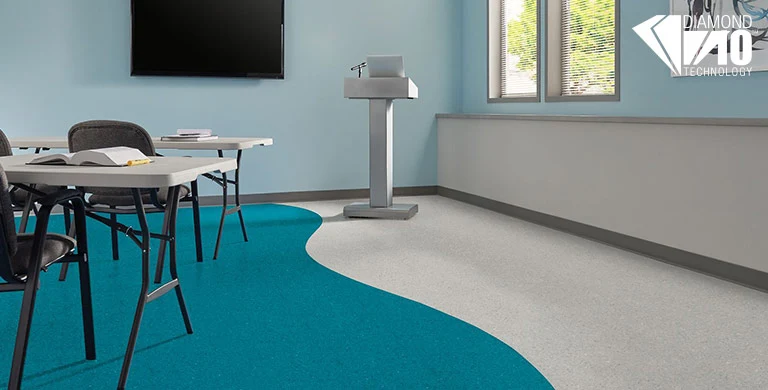
Commercial carpet is popular for office environments but requires replacement sooner than other options. Expected lifespan in government facilities: 5–15 years, averaging 8–10 years.
- Heavy foot traffic — Building entrances and corridors may need replacement in as little as 5 years
- Insufficient maintenance — Professional deep cleaning every 6–12 months is required; vacuuming alone isn’t enough
- Moisture and spills — Water damage, humidity, and delayed cleanup cause mildew and fiber deterioration
- Poor installation quality — Improper stretching or seam work creates premature failure
How to extend carpet life: Install entrance matting systems to capture dirt before it reaches primary flooring, schedule professional restorative cleaning every 6–12 months, and consider carpet tiles in high-traffic areas for easier section replacement.
How Long Does Vinyl Flooring Last in Institutional Settings?
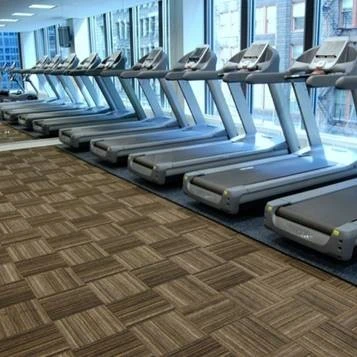
Vinyl products—including luxury vinyl tile (LVT), vinyl composition tile (VCT), and sheet vinyl—offer strong durability, cost-effectiveness, and design versatility. Expected lifespan: 10–20 years.
- Product quality is critical — Commercial-grade vinyl with heavy-duty wear layers outlasts residential-grade products by 5–10 years
- Subfloor preparation matters — Installation over a smooth, level subfloor prevents premature adhesive failure
- Cleaning products affect lifespan — pH-neutral products are required; harsh cleaners damage the wear surface
- Periodic refinishing extends life — Stripping and recoating every 3–5 years is recommended
Common mistake: Specifying residential-grade vinyl for commercial applications. The cost difference is minimal, but the performance gap is significant. Continental Flooring offers commercial-grade vinyl flooring from manufacturers like Armstrong with wear layers designed for institutional traffic levels.

Why Does Tile Last Longer Than Other Flooring Options?
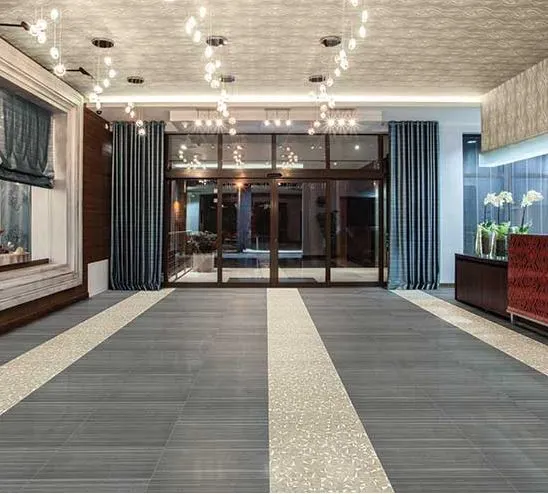
Ceramic and porcelain tile consistently outlasts other commercial flooring choices, making it cost-effective over its lifecycle despite higher initial installation costs. Expected lifespan: 20–30+ years.
- Extreme surface hardness — Resists wear from heavy foot traffic, carts, and equipment
- Non-porous when sealed — Doesn’t absorb stains or harbor bacteria, critical for healthcare facilities
- Easy to clean and sanitize — Supports infection control protocols
- Chemical resistant — Handles cleaning products that would damage other flooring types
The grout consideration: While tile is exceptionally durable, grout integrity determines overall lifespan. Use pH-neutral cleaners and schedule professional grout sealing every 2–3 years to prevent bacteria infiltration and moisture damage.
What Factors Reduce Flooring Lifespan in Government Facilities?
Even premium flooring products fail prematurely when these controllable factors aren’t managed:
- Poor installation quality — Inadequate subfloor prep, incorrect adhesive, or improper moisture testing causes early failure regardless of product quality
- Traffic levels exceeding specification — Misspecification is a planning failure, not a product failure
- Inadequate or incorrect maintenance — Wrong cleaning products, inconsistent schedules, or missing entrance matting accelerate wear exponentially
- Moisture infiltration — Leaks, high humidity, or poor drainage destroy flooring before surface wear becomes visible
- Deferred maintenance — Delaying cleaning, sealing, or minor repairs transforms small issues into major replacements
Specifying the right product for actual use conditions delivers better value than choosing the lowest initial cost. A budget-grade product that fails in 6 years costs significantly more over its lifecycle than a commercial-grade product that lasts 15 years.
When Should You Replace Flooring Instead of Continuing Maintenance?
Flooring replacement becomes necessary when you observe:
- Safety hazards — Curling edges creating trip hazards, slippery surfaces, or visible moisture damage indicating mold growth
- Structural integrity compromised — Delamination, bubbling, widespread cracking, or subfloor damage visible through flooring
- Maintenance costs approaching replacement value — Annual expenses reaching 15–20% of replacement cost
- Permanent damage beyond repair — Staining unresponsive to cleaning, worn-through wear layers, or unacceptable appearance
- Performance degradation — Odors indicating bacterial growth or inability to maintain sanitary conditions
Budget-planning threshold: Track annual maintenance costs as a percentage of replacement value. When that percentage consistently exceeds 15–20%, replacement delivers better financial value than continued maintenance.
How Should Facility Managers Plan for Flooring Replacement?
Strategic flooring planning prevents emergency replacements and budget crises:
- Implement annual condition assessments — document wear patterns, photograph problem zones, and project remaining useful life
- Build realistic timelines into capital budgets using average lifespan ranges for your traffic levels, not manufacturer maximum claims
- Plan replacement by zone — high-traffic corridors need earlier replacement than administrative offices
- Consider phased replacement to reduce operational disruption and spread capital costs across multiple fiscal years
- Maintain comprehensive installation records — dates, product specifications, warranty terms, maintenance schedules, and repair history
- Calculate lifecycle costs, not just installation costs — factor in maintenance expenses, expected lifespan, and replacement frequency
Procurement advantage: Many government facilities can leverage GSA Schedule contracts or cooperative purchasing agreements (1GPA, OMNIA Partners, CMAS) to simplify procurement while meeting competitive bidding requirements.
FAQ: Commercial Flooring Lifespan
Can flooring last longer than the ranges listed here?
Yes, particularly in low-traffic areas. Private offices often see carpet last 12–15 years; polished concrete and high-quality tile can perform for 30–50+ years. However, capital planning should use realistic averages for actual traffic conditions.
Does professional installation really affect how long flooring lasts?
Absolutely. Poor installation—inadequate subfloor prep, wrong adhesive, unaddressed moisture issues—can cut expected lifespan in half. For government projects where failures disrupt operations and create safety liability, professional installation isn’t optional.
What single maintenance practice extends flooring life the most?
Entrance matting systems deliver the highest ROI. Quality entrance mats capture 70–80% of dirt and moisture before reaching primary flooring, reducing abrasive wear across all flooring types and potentially extending flooring life by 20–30%.
How do I know if flooring needs replacement or just better maintenance?
If professional cleaning and repairs no longer improve appearance or performance, replacement is typically necessary. Safety issues like trip hazards require immediate replacement regardless of age. When annual maintenance expenses approach 15–20% of replacement cost, it’s time to replace.
Should we replace all flooring at once or in phases?
Phased replacement usually makes more sense for occupied facilities—it reduces disruption, spreads capital costs across fiscal years, and lets you prioritize damaged areas first. However, if multiple areas are failing simultaneously, consolidated replacement may offer better economies of scale.
What documentation supports future replacement budget requests?
Maintain: installation dates and original specifications, warranty information, maintenance schedules with actual costs, repair history with photos, traffic pattern documentation, condition assessment reports, and lifecycle cost analyses comparing current flooring to replacement options.
How does traffic classification affect product selection?
Match product durability ratings to actual traffic levels:
- Light traffic (private offices) — mid-grade acceptable
- Medium traffic (classrooms, shared spaces) — commercial-grade required
- Heavy traffic (corridors, lobbies) — heavy-duty commercial-grade essential
- Extra-heavy traffic (entrances, transit areas) — specialized high-performance products required
Misspecification is the leading cause of premature flooring failure.
What This Means for Your Next Flooring Project
Understanding realistic flooring lifespans transforms how you approach capital planning—but selecting the right product for your specific facility requires expertise across materials, installation requirements, traffic analysis, and institutional procurement.
Many of our flooring products are available on GSA Contracts. Continental Flooring Company can help you find the right combination of materials, design, and performance features for your facility. With decades of experience and partnerships with leading manufacturers, we’re ready to help you make confident, budget-sound flooring decisions.
Please feel free to contact us for product advice, free samples, assistance with specifications, or to place an order. We welcome contract purchases, formal bids, RFQs, or Open Market requirements.
Call Toll Free: 800-825-1221 | Email: info@continentalflooring.com
We serve:
- Federal, State, County, and Municipalities
- Healthcare
- Schools, Colleges, and Universities
- Public Housing Authority (PHA)
Continental Flooring has been serving government agencies since 1979 and is a leading provider of flooring and ceilings in the public sector.