
Most commercial carpet lasts between 5 and 15 years, but the realistic working answer depends on which product you choose and how hard your facility uses it. Commercial broadloom typically performs for 7 to 10 years in moderate-traffic government and institutional settings, while commercial carpet tile often reaches 10 to 15 years — and can stretch further because worn or damaged tiles can be replaced individually instead of recarpeting an entire space.
If you manage flooring budgets for a government building, school, hospital, or public housing property, that range matters. The difference between a carpet that lasts 7 years and one that lasts 12 changes your replacement cycle, your capital planning, and your total cost of ownership. This blog explains what to realistically expect from broadloom and carpet tile, what shortens or extends their service life, and how to specify commercial carpet that holds up under your traffic.
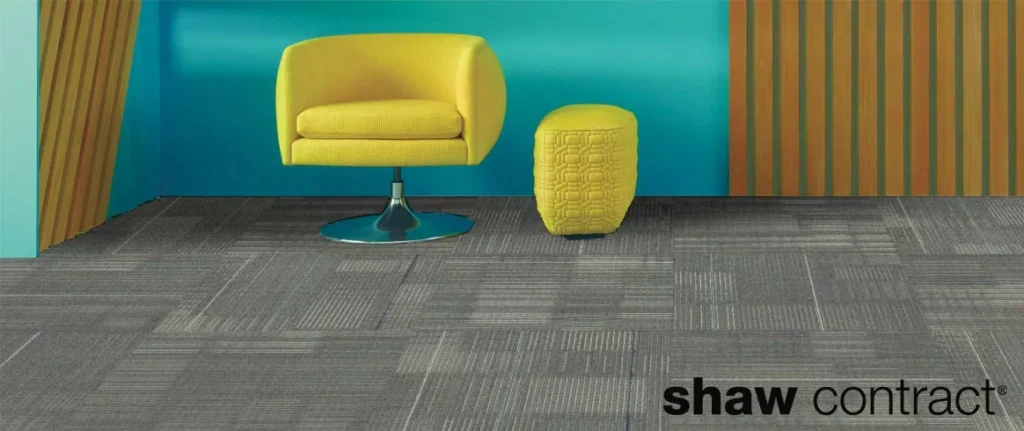
How Long Does Commercial Broadloom Carpet Last?
Commercial broadloom — carpet produced on a wide loom and typically supplied in 12-foot rolls — generally lasts 7 to 10 years in commercial use, with some installations performing well beyond a decade and others wearing out in 5 years under heavy traffic.
Broadloom is most often glued directly to the subfloor and cut for wall-to-wall coverage, which gives it a seamless appearance well suited to lobbies, corridors, and large open areas. Because it installs as a continuous surface, broadloom can be a strong value on upfront material cost. The tradeoff is replacement: when broadloom wears in a high-traffic lane, you usually replace the whole room rather than the worn section.
Typical broadloom lifespan by setting:
- Private offices and low-traffic areas: 10+ years
- General office and classroom space: 7 to 10 years
- Corridors, entrances, and heavy public areas: 5 to 7 years
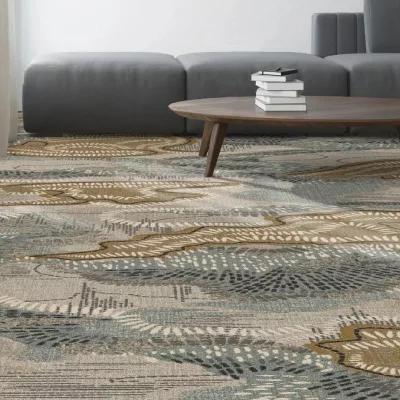
How Long Does Commercial Carpet Tile Last?
Commercial carpet tile — also called modular carpet or carpet squares — typically lasts 10 to 15 years, and its replaceable design can extend the usable life of an installation even longer.
Carpet tile is manufactured in pre-sized squares or planks tufted to a high-performance backing. Unlike broadloom, it is typically set with a releasable, pressure-sensitive adhesive rather than permanent glue — which is exactly what lets you lift and swap a single tile. When a tile is stained, worn, or damaged, you replace that tile instead of the whole floor. For facilities that keep attic stock (extra matching tiles from the original order), this means a worn entrance lane can be refreshed without a full renovation — one of the biggest reasons carpet tile often outlasts broadloom in real-world institutional use. You can read more in our complete guide to carpet tile.
Carpet tile usually costs 10 to 20% more per square foot than comparable broadloom, but the ability to swap worn tiles, the lower installation waste, and the reduced disruption (tiles install up to and under furniture with less teardown) frequently make it the better lifecycle value in busy government and commercial spaces. For more on the modular advantage, see our look at moving beyond broadloom to carpet tile.
What Determines How Long Your Carpet Will Last
Two carpets installed on the same day can wear out years apart. These are the factors that move the number.
Fiber Type
Fiber is the single biggest driver of durability. Nylon is the highest-quality commercial carpet fiber — more expensive, but more resilient, so it holds its appearance longer under heavy traffic. Olefin (polypropylene) is the budget choice; it is solution-dyed for good stain resistance and stands up to moderate traffic, but it crushes and wears faster in demanding areas. For a deeper comparison, see our overview of what makes the best commercial carpet. In short: in heavy-traffic facilities, spending more on nylon usually pays off over the life of the carpet.
Traffic and TARR Ratings
The more foot traffic, the shorter the life — and the more important it is to match the product to the load. Look for the Texture Appearance Retention Rating (TARR), an industry measure of how well carpet keeps its appearance under wear. Continental Flooring’s commercial carpet lines carry TARR ratings such as Heavy (3.0) and Severe (3.5); a Severe-rated carpet is built to hold up in the highest-traffic institutional corridors, while a Moderate or Heavy rating may be appropriate for lighter offices. Specifying the right TARR rating for the space is one of the most reliable ways to get the lifespan you are paying for.
Maintenance and Entrance Matting
Carpet that is cleaned and protected lasts dramatically longer than carpet that isn’t. Most premature carpet failure traces back to dirt and grit that grinds at the fibers. Two practices extend life the most:
- Entrance matting at every exterior door to capture dirt before it reaches the carpet. Quality entrance mats are your first line of defense and can stop the majority of tracked-in grit.
- Routine vacuuming plus periodic professional deep cleaning, following the manufacturer’s maintenance instructions and warranty requirements.
Installation Quality
Even the best carpet fails early if it is installed poorly. Improper stretching, weak seams, or installation over an uneven or damp subfloor accelerates wear and can void warranties. Professional commercial flooring installation — by crews experienced with institutional substrates and conditions — protects the lifespan you specified.
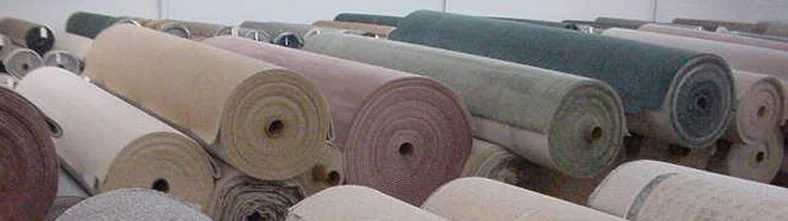
Common Carpet Lifespan Mistakes to Avoid
A few recurring mistakes shorten carpet life and inflate lifecycle cost:
- Specifying by price alone. The lowest-cost carpet often wears out first, leading to earlier replacement and higher total cost.
- Ignoring TARR ratings. Putting a light-duty carpet in a heavy-traffic corridor guarantees a short life.
- Skipping entrance matting. Without it, every exterior door becomes a grit pump that wears the nearest carpet first.
- Not keeping attic stock for carpet tile. Without matching spare tiles, spot replacement — carpet tile’s biggest advantage — isn’t possible.
- Deferred maintenance. Stretching cleaning intervals to save money usually costs more in shortened carpet life.
Procurement and Specification Notes
For government and institutional buyers, a few specification and purchasing details directly affect carpet lifespan and value:
- Match the TARR rating and fiber to the traffic. Severe-rated nylon for corridors and high-traffic public areas; lighter ratings where appropriate.
- Check NSF/ANSI-140 certification. Many commercial carpets carry NSF/ANSI-140 sustainability certification at Gold or Platinum levels, useful for green building and documentation requirements.
- Review the warranty. Commercial carpet warranties commonly cover wear and texture retention for a set number of years; confirm the maintenance requirements that keep the warranty valid.
- Use your contract vehicles. Continental Flooring carpet is available to government buyers through GSA, 1GPA, OMNIA Partners, and other cooperative contracts, which simplifies procurement and keeps projects on schedule.
Continental Flooring supplies carpet from manufacturers including Shaw, Mannington, and Mohawk Aladdin, and can provide material only or complete installation depending on your needs.
Frequently Asked Questions
How long does commercial carpet last on average?
Most commercial carpet lasts 5 to 15 years. Broadloom typically runs 7 to 10 years in commercial settings, while carpet tile often reaches 10 to 15 years and can last longer when worn tiles are replaced individually.
Does carpet tile really last longer than broadloom?
Often, yes — not because the fiber is inherently more durable, but because damaged or worn tiles can be replaced one at a time instead of recarpeting the whole room, which extends the usable life of the installation.
What is a TARR rating and why does it matter?
TARR (Texture Appearance Retention Rating) measures how well carpet keeps its appearance under traffic. Ratings like Heavy (3.0) and Severe (3.5) tell you whether a carpet is built for your traffic level — a key predictor of how long it will look good.
Is nylon or olefin carpet better for a high-traffic facility?
Nylon. It costs more but resists crushing and wear far better than olefin, so it holds its appearance longer in heavy-traffic government and institutional spaces. Olefin is better suited to budget-driven, lower-traffic areas.
Can replacing carpet tiles really extend the life of a floor?
Yes — if you keep attic stock. Matching spare tiles from the original order let you refresh worn lanes and entrances without a full renovation, which is one of carpet tile’s biggest lifecycle advantages.
How can I make my commercial carpet last longer?
Install entrance matting at every exterior door, vacuum regularly, schedule periodic professional deep cleaning, follow the manufacturer’s maintenance guidelines, and choose the right fiber and TARR rating for the space.
Plan Your Next Carpet Project with Confidence
Since 1979, Continental Flooring Company has helped government and institutional buyers choose carpet that fits their traffic, their budget, and their replacement cycle. Whether you are specifying carpet for government facilities, healthcare, or schools, we can help you match the right broadloom or carpet tile to the lifespan you need — and supply it on the contract vehicles you already use.
Many of our flooring products are available on GSA Contracts. Continental Flooring Company can help you find the right combination of materials, design, and performance features for your facility. Contact Continental Flooring Company today to explore your flooring solutions. With decades of experience and partnerships with leading manufacturers, we’re ready to help you find the best carpet solution for your space!
Please feel free to contact us for product advice, free samples, assistance with specifications, or to place an order. We welcome contract purchases, formal bids, RFQs, or Open Market requirements. One call will do it all!
Contact Us Today!
Call Toll Free 800-825-1221 | Email: info@continentalflooring.com
Our Segments
- Federal, State, County, and Municipalities
- Healthcare
- Schools, Colleges, and Universities
- Public Housing Authority (PHA)
Continental Flooring has served government agencies since 1979 and is a leading provider of flooring and ceilings for the public sector.